

When a chargeback is opened, if the disputed amount is over $50, then blacklist the buyer and tell me on Discord.There is no AI guessing involved. An automation does exactly what you set up, costs nothing to run, and shows you every run afterwards. You find it in the dashboard under Automations (
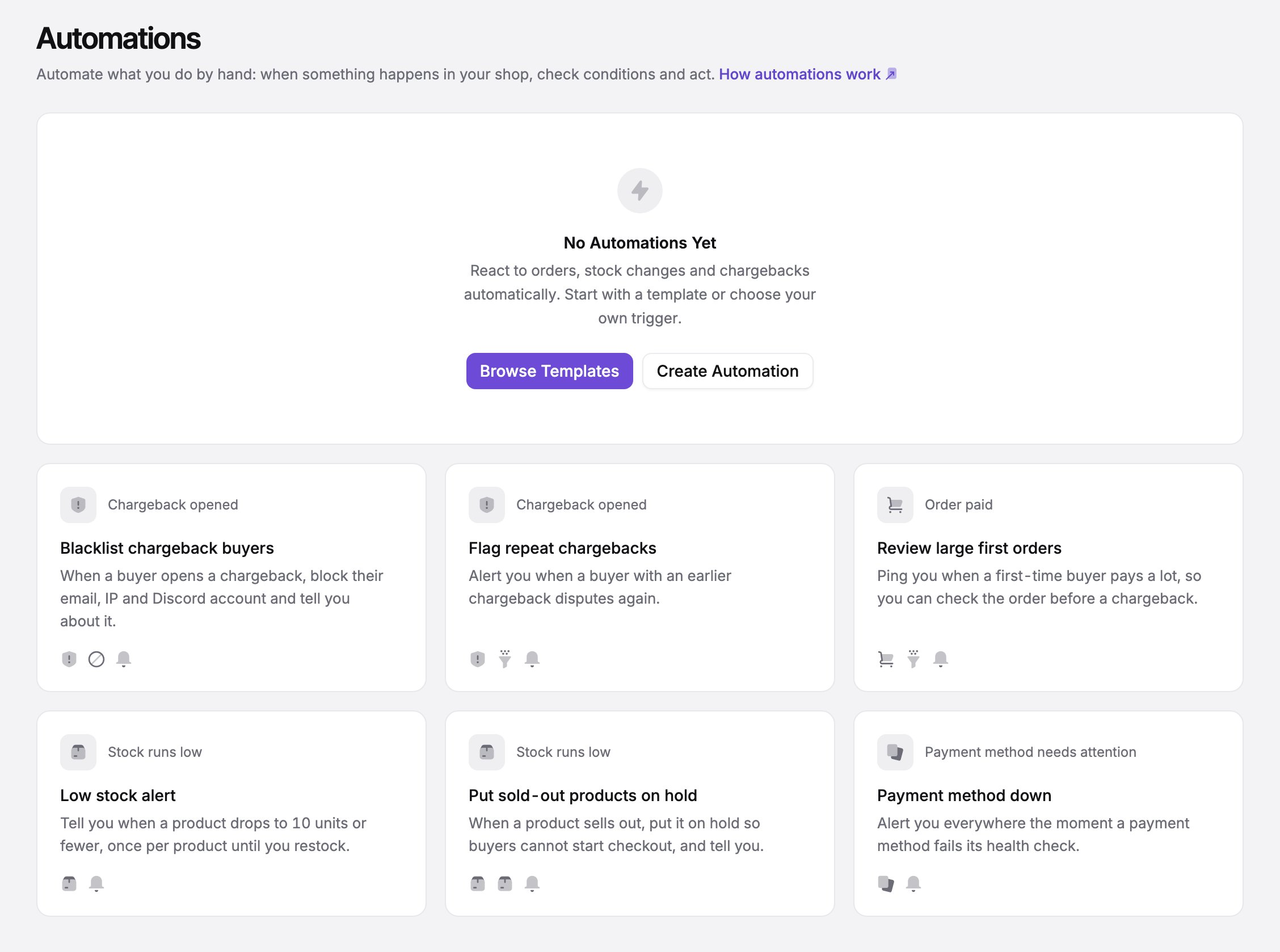
/automations). The first time you open it, you get a short introduction and a few templates to start from.
Automations and AI Agents
The dashboard calls these rules Automations; the Developer API calls the resourceworkflows.
Automations are also available through the Developer API and the Shoppex MCP server. An AI agent such as Claude or Codex can read your automations, draft new ones, test them and report on their runs. An automation created that way always starts as a draft, so nothing goes live until you, or the agent on your explicit instruction, turns it on.
How an Automation Works
1
When: the trigger
What starts the automation. That is either something that happens in your shop (an order is paid, a chargeback is opened, a ticket comes in), a number that crosses a line (stock runs low, revenue drops), or a time on a schedule.
2
If: the conditions
Optional checks on the event, such as “the order total is at least 150” or “it is the buyer’s first order”. Match all of them or any of them. Without conditions, the automation runs every time the trigger fires.
3
Then: the steps
What the automation does, in order: notify you, email the buyer, blacklist, tag, create a coupon, add store credit, change a product, give a Discord role, post in Discord, or call your own webhook. Steps can wait between each other and check again before they continue.
Start from a template
The fastest start is a template. Each one is a complete automation for something sellers automate most. Pick one, adjust the numbers and texts to your shop, and turn it on.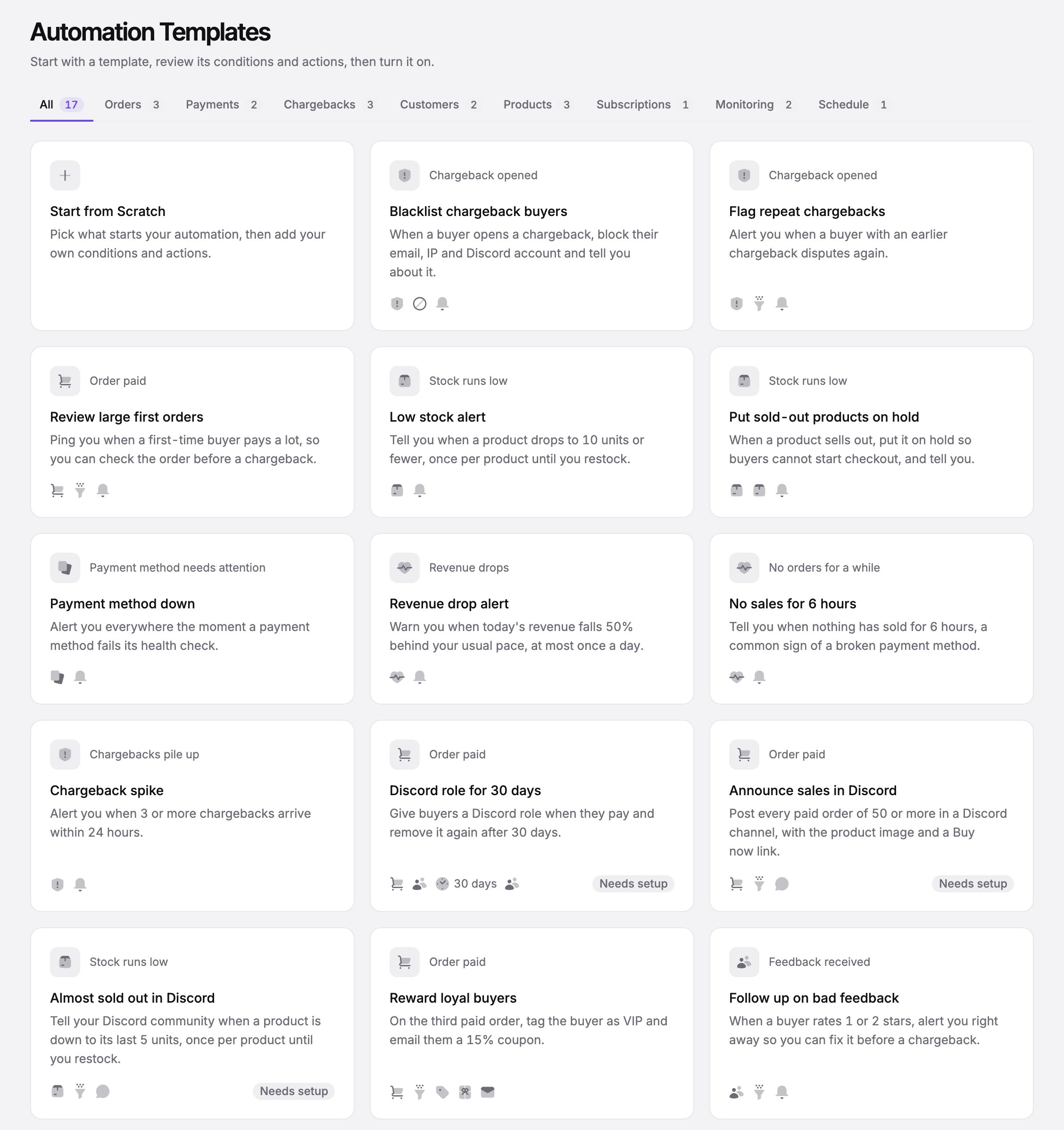
- Blacklist chargeback buyers: block the buyer’s email, IP and Discord account the moment they open a chargeback, and tell you about it.
- Review large first orders: ping you when a first-time buyer pays a lot, so you can check the order before it becomes a dispute.
- Put sold-out products on hold: when a product sells out, hide it so nobody can start a checkout, and tell you.
- Payment method down: alert you everywhere the moment a connected payment method fails its health check.
- Reward loyal buyers: on a buyer’s third paid order, tag them as VIP and email them a 15% coupon.
- Daily sales digest: yesterday’s revenue and orders, every morning at the time you choose.
Build an Automation
The editor is one page, from top to bottom: When, If, Then. There are no boxes to connect and no diagram to arrange. On the right, In Short repeats the whole automation as plain sentences, so you can read back what you built.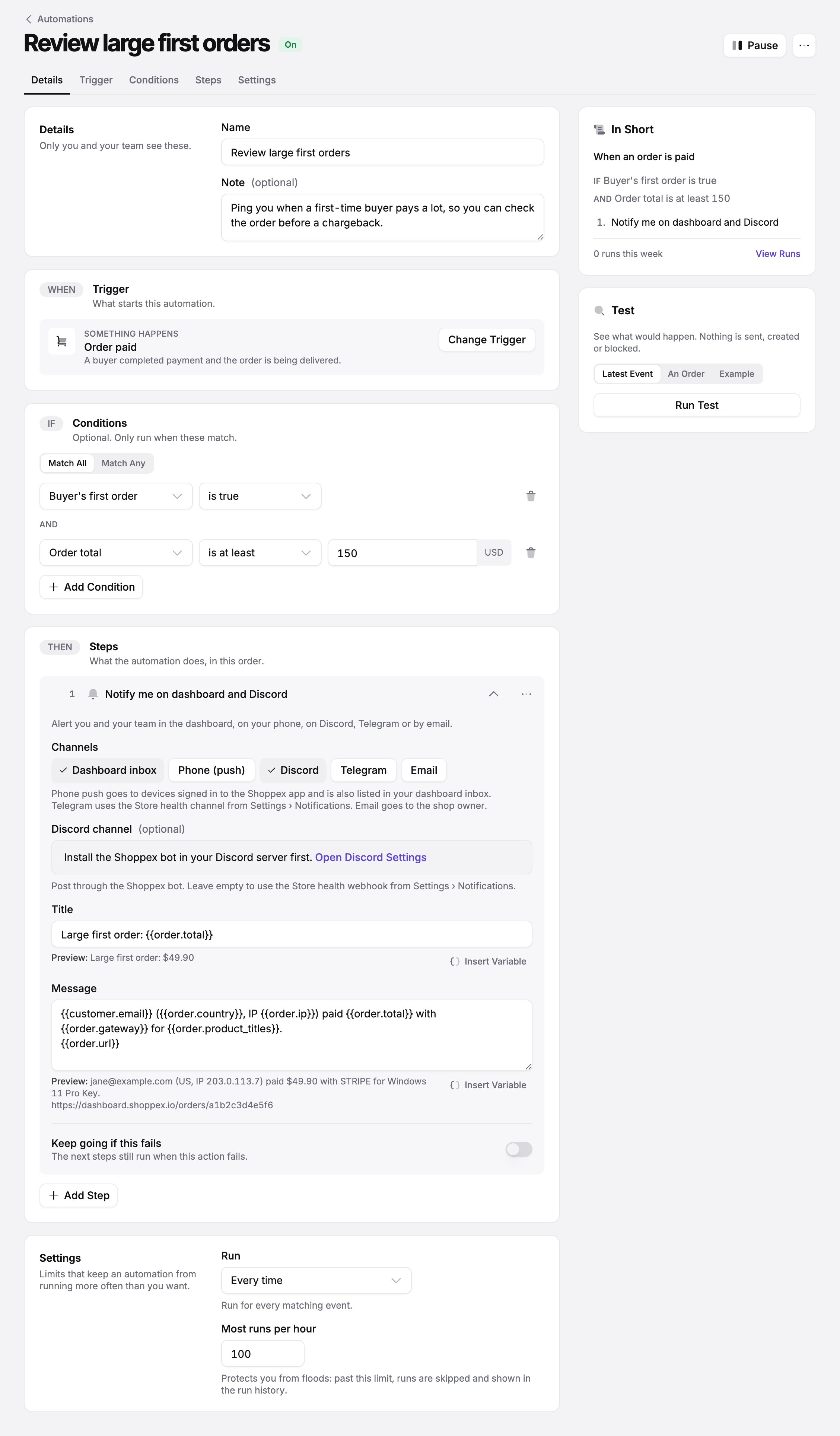
Triggers
Order shipped runs once, when you first mark an order as shipped, with its tracking number and link. Turn on Also on tracking updates if it should run again when you correct the tracking number.
Metric triggers are checked every five minutes. They fire once when the number crosses the line and again only after it has recovered. A revenue drop alerts you once, not every five minutes.
Conditions
Pick a field, a comparison and a value: Order total is at least 150. The fields you can pick depend on the trigger. A chargeback has a disputed amount and a reason, an order has a total, a country, a payment method and its products, and a customer has their paid orders, total spent, tags and past chargebacks. A condition on a value the event does not have never passes. An automation never runs by accident because a field was empty.Steps
Wait and Only continue if make follow-ups simple. For example: give a Discord role when an order is paid, wait 30 days, then remove it again.
Titles and messages can use variables such as
{{order.total}} or {{customer.email}}. Choose Insert Variable next to a field to pick one, and the Preview under the field shows the text as it will be sent.
Where notifications go
Send me a notification reaches you where you are:- Dashboard inbox: the bell in the dashboard.
- Phone: a push notification from the Shoppex app. Sign in to the app on your phone and allow notifications.
- Discord: your Store health webhook from Settings → Notifications, or a channel of your server when the Shoppex bot is installed there.
- Telegram: your connected Telegram bot.
- Email: the shop owner’s email address.
#drops, or celebrate a big sale in #sales. It posts through the Shoppex bot, so the bot has to be installed on your server first.
Test before you turn it on
The Test card shows what the automation would do, without doing it. Nothing is sent, created or blocked. Test against the latest real event, against an order you pick, or against example data.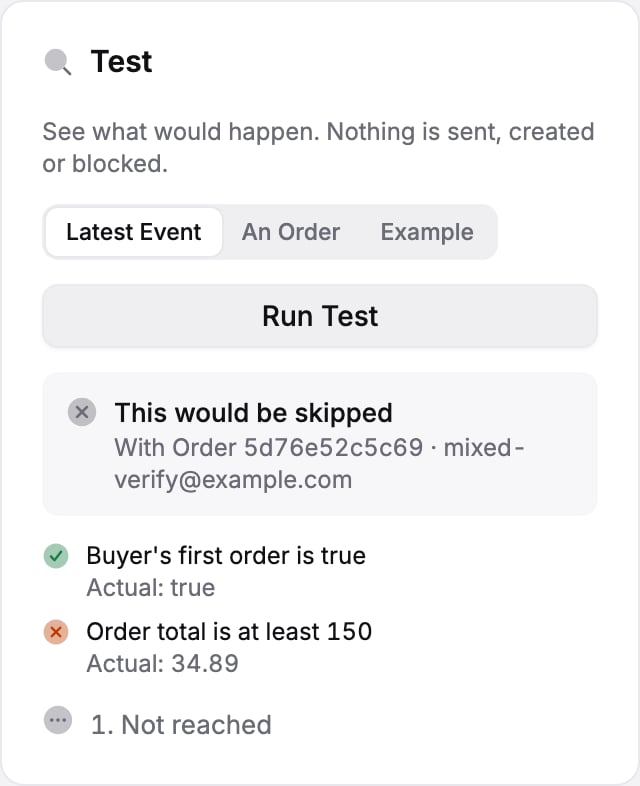
Turn it on
A new automation is a draft until you turn it on. Drafts may be unfinished. To turn an automation on, every required field has to be filled in. If something is missing, the editor takes you straight to it. A few settings keep an automation in check. Most shops never change them:- Run: every time, once per customer, or once per order.
- Most runs per hour: a flood guard. Past the limit, runs are skipped and shown in the history, so a sudden burst of events cannot send you a hundred messages.
See what happened
Automations → Runs lists every run: which automation, for which order or customer, how far it got and whether it worked. Open a run to see the event that started it, how each condition was evaluated, and what each step did.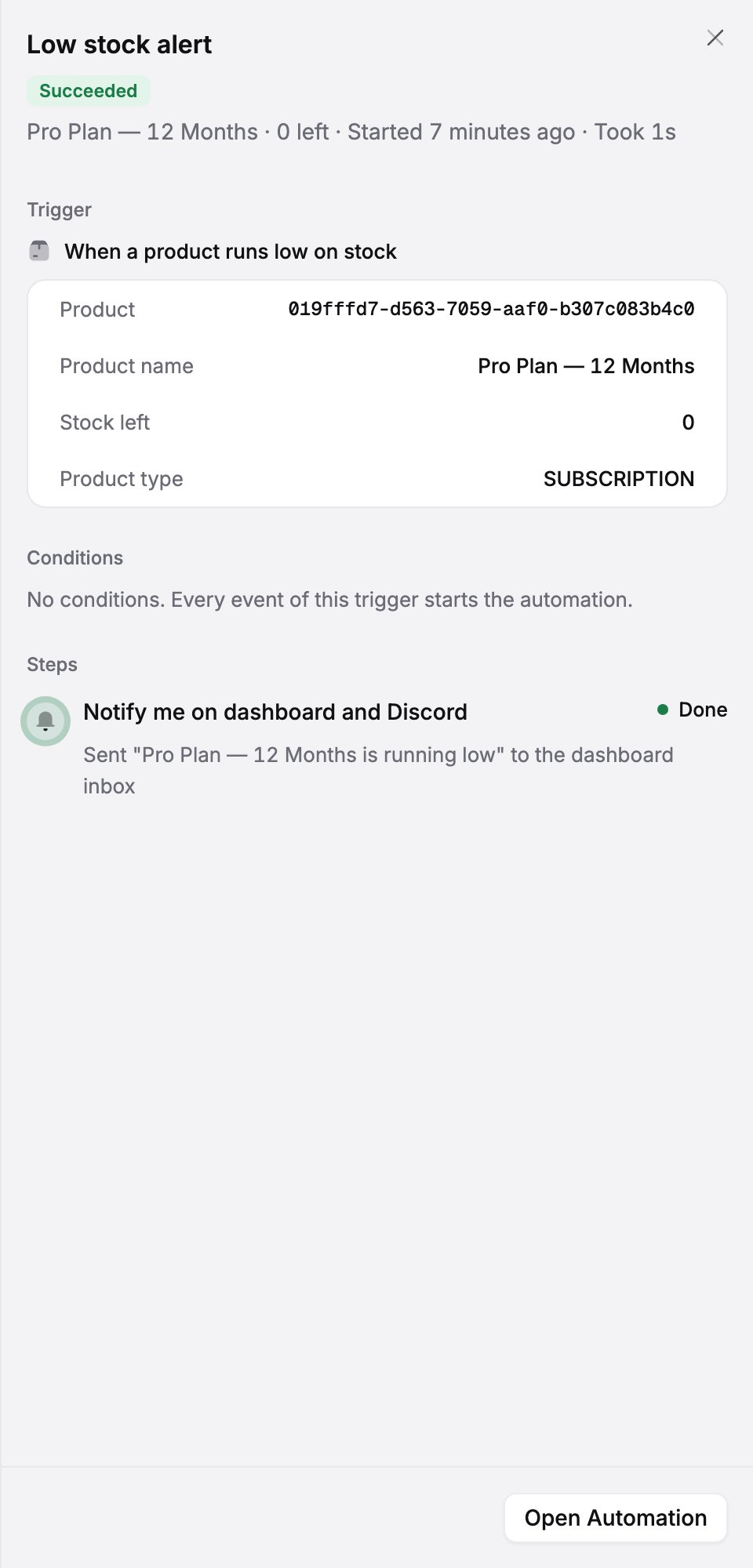
Automations protect themselves. If an automation fails five times in a row, for example because a Discord role was deleted, Shoppex pauses it and tells you, instead of failing silently on every order. An automation also never triggers itself, and chains of automations that trigger each other stop after three levels.
The overview
The Automations page shows how your automation is doing: how many automations are on, how many runs the last seven days had, the success rate and any failed runs. Each automation shows its trigger, what it does, its latest run, and a switch to turn it on or off.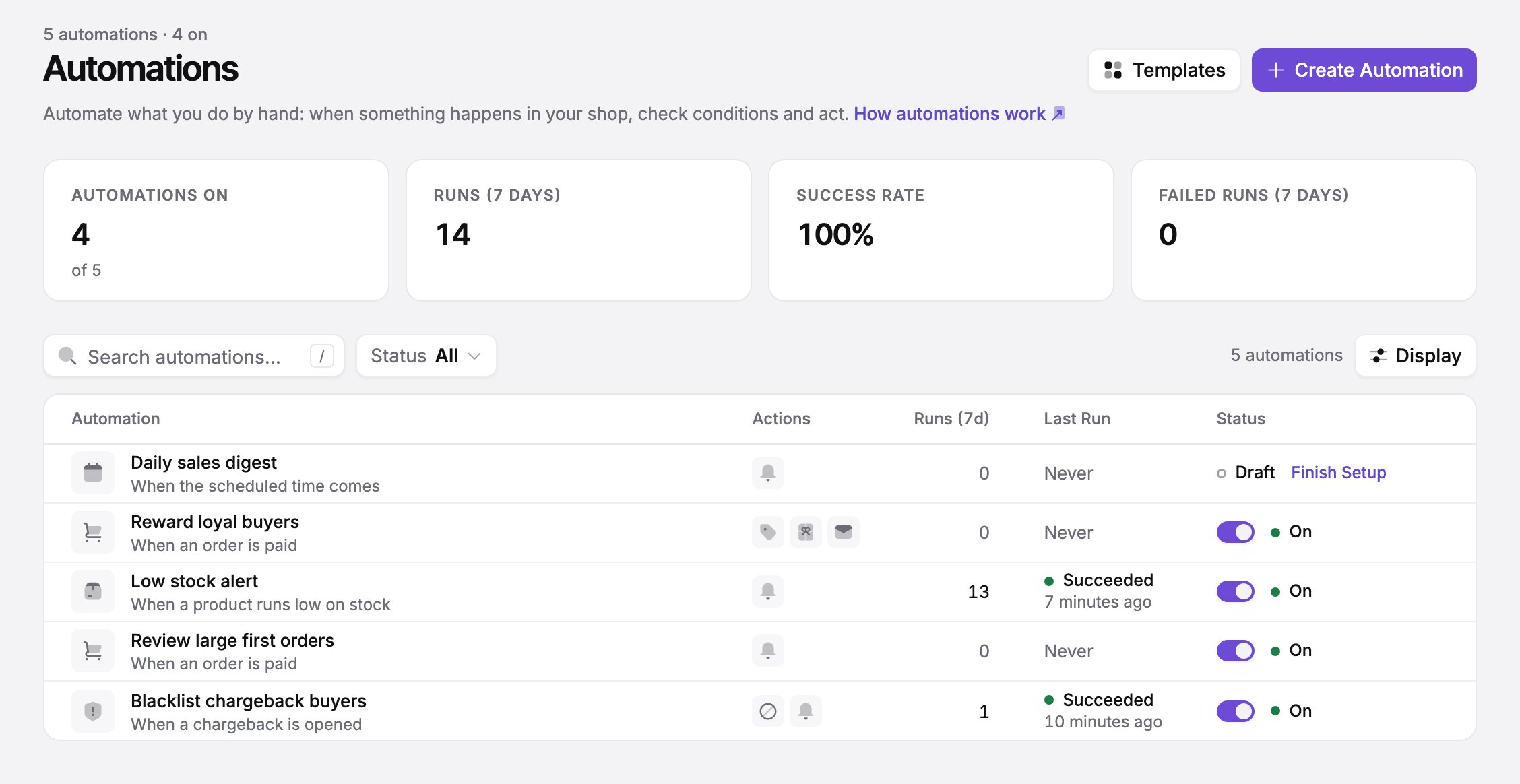
Good to know
- Email flows send email sequences to your contacts and live in Email → Email Flows. An automation can tag a customer, and a broadcast can target that tag.
- A shop can have up to 100 automations, each with up to 20 conditions and 20 steps. A single wait can last up to 90 days.
- Team members need the Read Automations permission to see automations and their runs, and Manage Automations to change them. Neither comes with another permission, because an automation can blacklist buyers and issue coupons.